OUR SOLUTION
A Circular Materials Pathway for Lower-Carbon Construction
BioCrete links organic waste, sustainable processing and construction material demand into one integrated pathway. We divert organic waste streams before landfill, convert them into biochar-based aggregate replacement and integrate that material into concrete supply chains to support lower-carbon construction.
Divert
1

Capture Waste Before Landfill
BioCrete works with waste stream owners, councils, transfer stations, resource recovery and collection operators to divert waste away from landfill.
✓ Large waste generators
✓ landfill diversion & transfer station interception
✓ Council green waste pathways & FOGO-aligned recovery
✓ Collection network partnerships.
Waste-side entry points
Convert
2
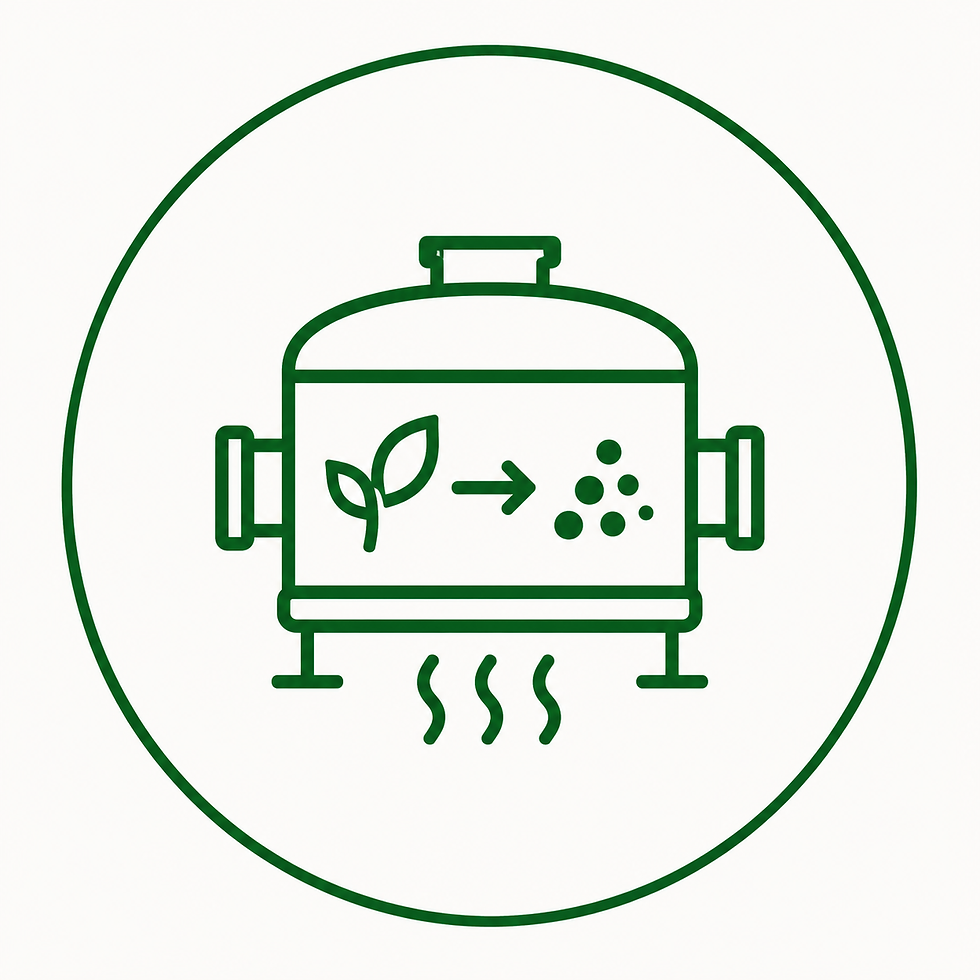
Convert into patented low-temperature Material
BioCrete converts waste into a patented low-temperature (~350 ℃), stable, low-density and porous biochar designed to replace a portion of fine aggregate in concrete.
Material Characteristics
✓ Low-energy processing
✓ transforms waste into a durable input
✓ lower density
✓ replaces a portion of sand
✓ Improves the characteristics of concrete
2
Validate
3

Validated with coffee waste field trials
Using coffee waste as its initial proof point, BioCrete has completed concrete field trials using its patented material, generating favourable results while continuing to assess other organic waste streams.
✓ 15% replacement of sand volume
✓ 30% increase in compressive strength
✓ Reduced cracking and shrinkage
✓ Improve hydration and water retention
✓ Total weight of 1 m³ concrete mix reduced by 11.5%
Concrete field trial results
Integrate
4

Integrate into existing supply chains
BioCrete integrates waste and construction supply chains by linking waste flows, processing and concrete demand within the same regional network.
Waste-stream side:
✓ Waste stream owners
✓ councils
✓ resource recovery operators
✓ transfer stations
✓ waste collectorsConstruction side:
✓ Concrete producers
✓ aggregate suppliers
✓ infrastructure projects
✓ ready-mix applications
✓ research and pilot partners
Localise
5

Localise Processing Through Modular Models
A key part of the BioCrete model is reducing transport distance by using modular strategies that overlap waste stream and construction logistics to enable near-project processing.
Processing model options
✓ Near-source processing
✓ modular facilities
✓ centralised hubs where appropriate
✓ reduced double handling
✓ lower transport complexity
Supply
6

Supply Flexibly to Different Users
BioCrete can enter the market through several pathways depending on partner type, project scale, batching process, transport distance and quality-control requirements.
Supply methods
✓ Bulk direct supply
✓ project-specific supply
✓ integration through existing suppliers
✓ smaller packaged formats
✓ near-site supply for major projects
Outcome
7

The Result: A Practical Circular Outcome
BioCrete creates value by turning organic waste into a useful construction input. The pathway can reduce landfill pressure, lower reliance on virgin sand, improve local circular material flows and support lower-carbon concrete strategies.
What BioCrete enbables
✓ Divert waste from landfill
✓ Reduce pressure on sand supply
✓ Support lower-carbon construction
✓ Improve local logistics efficiency
✓ Create commercial value from waste streams